Coloring pages have a way of multiplying. You print three cat pages on Monday, and by Friday there are seventeen half-finished sheets buried under the couch cushions. The blank ones crumple, the finished ones vanish, and the one page your child was most excited about ends up with a juice ring on it.
A little organization fixes all of that — not a Pinterest-perfect craft room, just a system simple enough that a four-year-old can follow it. Here are five systems that actually work in real homes.

1. The Binder System: Sort by Progress, Not Just Theme
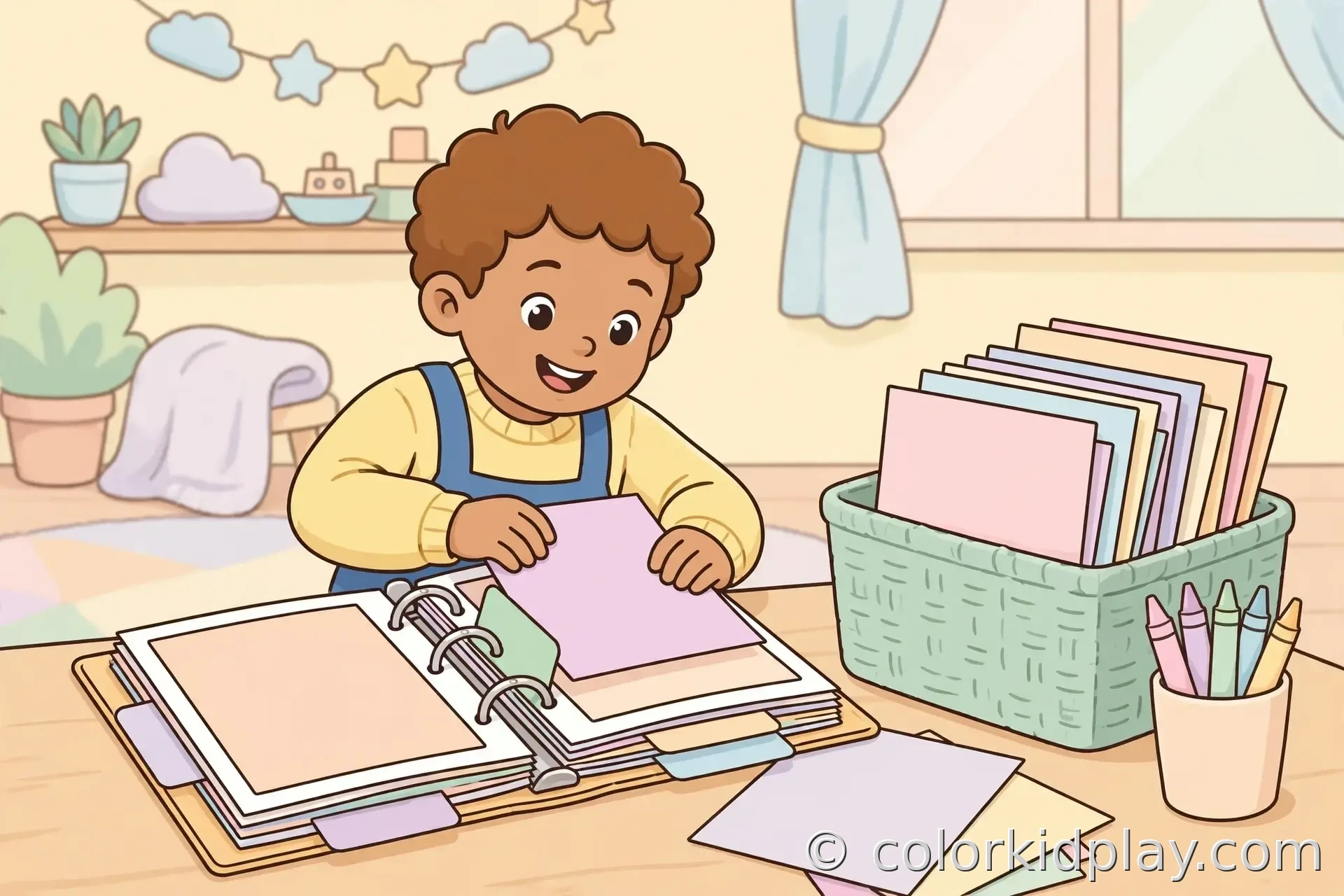
A basic three-ring binder with dividers is the fastest win. The trick is how you label the tabs. Most parents sort by theme (animals, letters, vehicles), but sorting by progress is what keeps the piles from growing:
- To Color — blank printed pages, newest additions first
- In Progress — pages started but not finished
- Finished Favorites — the ones worth keeping (be selective!)
Use sheet protectors for the “In Progress” section so marker pages can dry without sticking together, and let your child flip through it — it doubles as a visual menu of what’s available. A child who can see their options colors more often. Stock the “To Color” section with a mix of easy wins and new challenges; our easy cat coloring pages and alphabet coloring pages are great starting points because they work for a wide age range.
2. One Bin Per Kid
If you have more than one child, this is the rule that ends 90% of the arguments: each kid gets their own container. A shallow plastic bin, a magazine holder, or even a labeled shoebox works.
The bin holds their blank pages, current projects, and a small supply kit. Nothing goes in or comes out without them deciding — and nothing of theirs migrates into a sibling’s bin. If your kids love printable themes, let each one pick their own starter set: one might grab the dog coloring pages while another goes for the rabbit coloring pages. Personal ownership makes kids take better care of their pages.
3. The “Art Folder” for Works in Progress
Unfinished pages are the messiest category because they can’t be filed away yet and they’re fragile. Give each child a simple two-pocket folder — left pocket for blank pages, right pocket for in-progress ones. It travels from kitchen table to bedroom to grandma’s house without a single lost page.
This pairs well with a dedicated coloring station at home: when the folder lives in one spot, pages stop appearing under sofa cushions.

4. Magazine Holders for Coloring Books and Big Printables
Coloring books and large-format printed pages don’t fit in folders or binders. A row of magazine holders on a low shelf keeps them upright and visible — which matters more than it sounds. Books stacked flat get ignored; books standing upright get chosen.
Label each holder with a picture label for pre-readers (a paw print for animal pages, a letter A for learning pages). When a printable collection grows, you can dedicate a holder to favorites like the numbers 1–10 pages your preschooler uses for counting practice.
5. The 5-Minute Weekly Reset
No organizing system survives contact with real children without a reset ritual. Once a week — Sunday evening works well — spend five minutes with your kids doing three things:
- Toss the scribbles. If a page is beyond rescue and nobody cares about it, recycle it without guilt. Not every page is a keepsake.
- File the finished. Move completed pages your child loves into “Finished Favorites” or into your long-term plan for storing finished coloring artwork.
- Refill the blanks. Top up the “To Color” section with 3–5 fresh pages so there’s always something new waiting.
Make your child part of this. Kids as young as three can learn to sort finished from unfinished, and the ritual teaches them to value their work without hoarding every sheet.
What to Do With Digital Files
Don’t forget the source: keep your downloaded PDFs and PNGs in one folder on your computer or cloud drive, organized by theme, with clear file names like cat-coloring-page-01.png instead of download(14).png. You’ll thank yourself the next time a child asks for “that one page with the bunny” and you can actually find it.
Teach the Habit, Not Just the System
The real secret is that no container organizes pages by itself — the system works only if your kids use it. Build the habit the same way you built hand-washing: make it part of the routine, not a lecture. “Coloring time’s over — folder time” takes thirty seconds at the end of each session, and within a couple of weeks kids do it on autopilot. Praise the behavior, not the result: “You put your in-progress page in the right pocket!” lands better than “Good job cleaning.”
Resist the urge to reorganize their bins for them. A seven-year-old’s system might look chaotic to you, but if they can find what they want, it’s working. Your job is keeping the framework in place — bins labeled, blank pages refilled, the weekly reset happening — while they own the contents. That’s what turns an organization system into a life skill.
What About Crayons, Markers, and Scissors?
Pages are only half the mess. Keep supplies in a separate portable caddy — one the kids can grab and carry to wherever they’re coloring — so paper and tools live in different zones. Toss dried-out markers and broken crayons during the weekly reset; a caddy full of dead supplies is just as demotivating as a pile of crumpled paper. If your supply drawer is out of control, our guide to keeping coloring supplies organized covers that side of the battle.

Start Small
You don’t need all five systems. Pick the binder for a single child, or the one-bin-per-kid rule for siblings, and add the weekly reset. That’s enough. The goal isn’t a museum archive — it’s that your child can find a blank page when the coloring mood strikes, and you never lose a finished masterpiece to a juice ring again.